
Why Is My North Texas Lawn Thinning in the Shade?
A North Texas lawn often thins in the shade because turfgrass does not receive enough sunlight to produce the energy needed for dense, healthy growth. Bermudagrass is particularly sensitive to shade, while St. Augustinegrass and some zoysiagrasses tolerate lower light levels better. Trees can also compete with grass for water and nutrients, adding stress to already light-limited turf.
At Abracadabra Lawn Pest & Weed Control, we know that thinning grass is not always a simple fertilizer or watering problem. North Texas lawns face intense summer heat, periods of drought, compacted soils, pests, weeds, and significant differences in sunlight from one part of a property to another. Identifying the actual cause of thinning turf is important before choosing a lawn treatment service or attempting lawn repair. Our approach to lawn care considers the grass type, growing environment, seasonal conditions, and other stresses affecting the lawn so homeowners can make informed decisions about improving their turf.
Understanding Shade Problems in North Texas Lawns
Shade can limit turfgrass growth even when the lawn receives adequate fertilizer and water. Texas A&M AgriLife’s Water University notes that areas receiving less than approximately five hours of sunlight may not be good candidates for turfgrass or other sun-loving plants.
The amount of light matters, but so does the type of grass growing there. According to Texas A&M AgriLife’s turfgrass selection guidance, bermudagrass has very low to low shade tolerance, St. Augustinegrass has high shade tolerance, and zoysiagrass generally has moderate to high shade tolerance.
That means two lawns receiving similar amounts of sunlight may respond very differently depending on the turf species.
Why Does Grass Get Thin Under Trees?
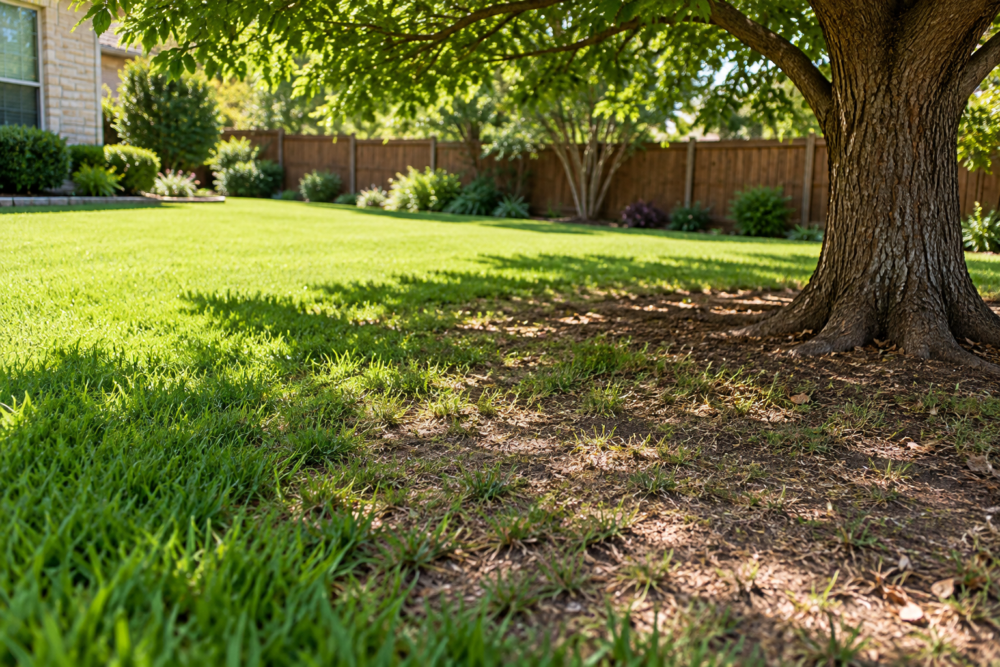
Grass under trees often becomes thin because it receives less sunlight while simultaneously competing with tree roots for water, nutrients, and growing space.
A mature tree canopy can dramatically reduce the amount of direct sunlight reaching the soil. Turfgrass responds by producing longer, thinner leaves as it tries to capture available light. As conditions become more limiting, turf density can decline and bare areas may develop.
Tree roots can make the situation more challenging. Trees and turf occupy the same soil and compete for available moisture and nutrients. During hot North Texas summers, that competition can become especially noticeable.
Common signs of excessive shade stress include:
- Gradually thinning turf beneath trees
- Longer, weaker grass blades
- Bare soil developing close to tree trunks
- Turf that recovers slowly from traffic
- Weeds appearing where grass has become sparse
- Grass that continues thinning despite normal fertilization
If thinning closely follows the shape of a tree canopy or occurs primarily on the north side of a home, fence, or other structure, limited sunlight should be considered as a possible cause.
Which North Texas Grass Types Handle Shade Best?
St. Augustinegrass generally offers the greatest shade tolerance among the warm-season turfgrasses commonly used in Texas, while bermudagrass has relatively poor shade tolerance.
Texas A&M AgriLife identifies St. Augustinegrass as the most shade-tolerant warm-season turfgrass. Zoysiagrass can also provide moderate to high shade tolerance, although performance varies among varieties. Bermudagrass typically requires substantially more sunlight and can struggle in moderate to dense shade.
For North Texas homeowners, grass type can therefore determine whether a shaded area remains reasonably dense or becomes progressively thinner.
Texas A&M AgriLife reports these general shade-tolerance differences:
- St. Augustinegrass: High shade tolerance
- Zoysiagrass: Moderate to high shade tolerance
- Bermudagrass: Very low to low shade tolerance
- Buffalograss: Low shade tolerance
Even a shade-tolerant grass still needs sunlight. “Shade tolerant” does not mean a grass can grow indefinitely without adequate light.
For example, Texas A&M’s St. Augustinegrass guidance indicates that Raleigh generally needs approximately five to six hours of direct sunlight per day to grow consistently. Palmetto needs approximately five hours when properly established and will not persist in dense shade.
Can Fertilizer Fix Grass That Is Thinning From Shade?
Fertilizer cannot compensate for inadequate sunlight, and applying excessive fertilizer to shaded turf may create additional lawn problems.
When homeowners notice thinning grass, lawn fertilizer is often one of the first solutions they consider. Fertilizer can correct certain nutrient deficiencies and support actively growing turf, but it cannot replace sunlight.
In fact, shaded turf may require less nitrogen than turf growing in full sun. Texas A&M AgriLife’s guidance for warm-season lawns recommends lower annual nitrogen levels for shaded St. Augustinegrass than for St. Augustine growing in sunny conditions.
A better approach is to determine why the turf is thinning before increasing fertilizer applications. A professional lawn care program can consider several possible factors, including:
- Amount and duration of sunlight
- Turfgrass species and variety
- Soil fertility
- Irrigation practices
- Soil compaction and drainage
- Insect or disease activity
- Mowing height
- Competition from trees and landscape plants
Correct diagnosis helps avoid spending time and money treating the wrong problem.
How Can I Help Grass Grow Better in a Shady Yard?
Improving available light and reducing additional stress can help turf perform better when the area still receives enough sunlight to support grass.
Start by evaluating how much direct sunlight actually reaches the thinning area. Conditions may have changed significantly since the lawn was originally installed because trees grow larger and canopies become denser over time.
Depending on the property, several adjustments may help:
- Prune trees appropriately. Selective professional pruning may allow more light to reach turf without harming the tree.
- Raise the mowing height. More leaf surface can help shade-stressed grass capture available sunlight. Texas A&M recommends mowing St. Augustinegrass at approximately 3 to 3.5 inches in shady lawns.
- Avoid overfertilizing. More fertilizer does not solve insufficient light.
- Manage irrigation carefully. Shaded areas may stay wet longer than sunny areas, so watering requirements can differ.
- Reduce unnecessary traffic. Shade-stressed turf may recover from foot traffic more slowly.
- Consider the grass variety. A turfgrass better suited to partial shade may perform better if the site provides adequate light.
The goal is to improve the entire growing environment rather than relying on a single grass treatment.
What If My Yard Is Too Shady for Grass?
If an area receives too little sunlight for turfgrass, repeated lawn repair may not provide a lasting solution.
Texas A&M AgriLife’s Water University advises that areas receiving less than about five hours of sunlight may be better suited to turfgrass alternatives and shade-loving landscape plants. Dense shade can simply be an unsuitable environment for maintaining conventional turf.
Instead of repeatedly replacing grass in an area where it cannot thrive, homeowners might consider shade-tolerant groundcovers, mulch, landscape beds, or other appropriate landscaping.
This does not mean the entire lawn needs to change. Many North Texas properties have isolated problem areas beneath mature trees, alongside homes, or near fences. Those areas can be treated differently while maintaining healthy turf throughout the sunnier portions of the property.
Frequently Asked Questions About Shady North Texas Lawns
How many hours of sunlight does grass need in North Texas?
Requirements depend on the grass species and variety. Texas A&M AgriLife notes that areas receiving less than approximately five hours of sunlight may not be ideal for turfgrass, while certain St. Augustine varieties generally need around five to six hours of direct sunlight for consistent growth.
Is St. Augustine or Bermuda better for shade?
St. Augustinegrass is considerably more shade tolerant. Texas A&M AgriLife rates St. Augustine’s shade tolerance as high, while bermudagrass ranges from very low to low.
Should I water shady grass more often?
Not necessarily. Shaded soil may lose water more slowly than areas exposed to direct North Texas sun. Irrigation should be based on actual soil moisture and turf needs rather than automatically increasing watering because grass appears thin.
Will grass grow back if I trim my trees?
It may if increased sunlight brings the area back into a suitable growing range and the remaining turf is capable of recovery. However, areas with dense shade or extensive competition from tree roots may continue to struggle even after pruning.
Get to the Root of Your Thinning North Texas Lawn
A thinning lawn does not automatically mean your grass needs more water or fertilizer. In many North Texas yards, shade is the underlying problem, especially beneath mature trees and around homes, fences, and other structures.
Abracadabra Lawn Pest & Weed Control provides lawn treatment services designed around the actual conditions affecting North Texas lawns. From lawn fertilizer and lawn weed control to diagnosing stressed or thinning turf, the right lawn care program starts with understanding what your grass needs and what its growing environment can realistically support.
Tired of guessing why your grass is thinning? Contact Abracadabra Lawn Pest & Weed Control today to learn more about professional lawn treatment and lawn care options for your North Texas property.