
The grass is slowing down. Why are the weeds still growing?
What Wylie homeowners should do when green patches appear before winter
Your mower is getting a break.
Your grass is growing more slowly.
But a few plants in the lawn apparently missed the announcement.
They’re green.
They’re growing.
And they’re becoming easier to spot as the surrounding grass loses its summer color.
For Wylie homeowners, that can raise a reasonable question:
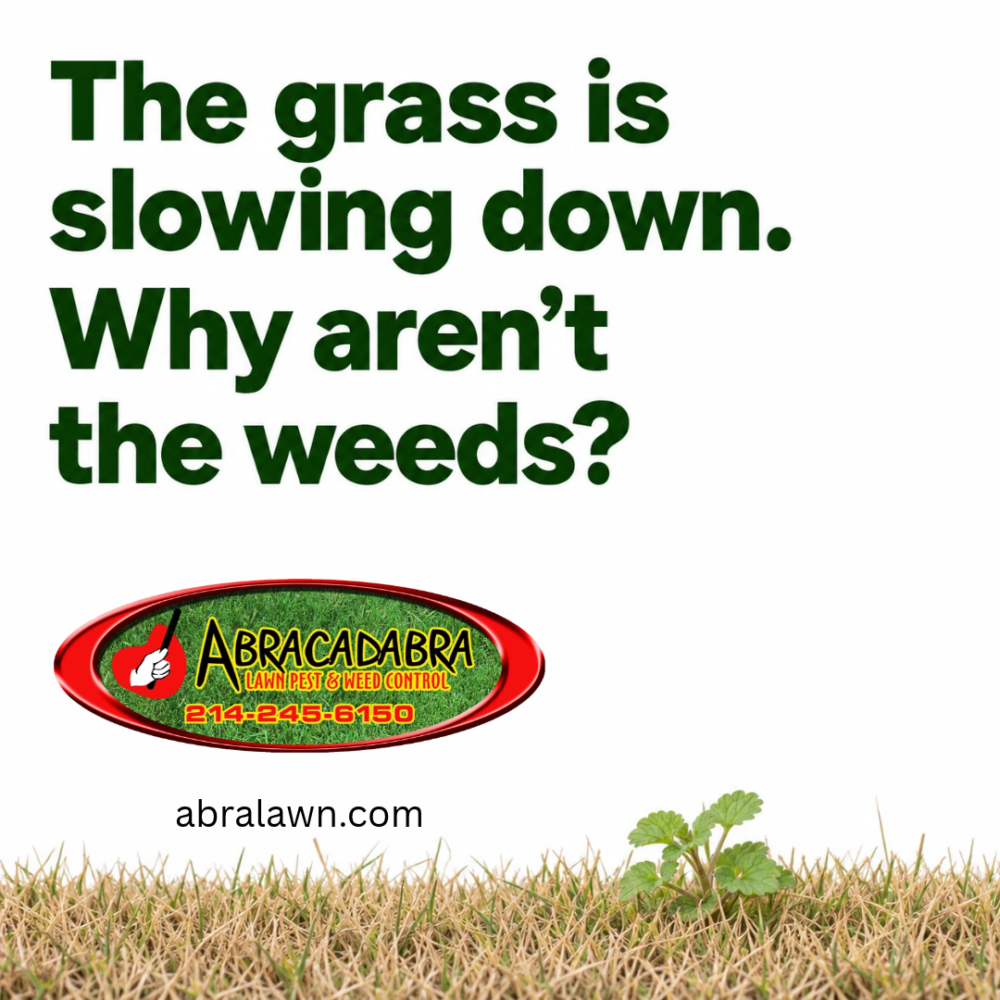
Why are weeds showing up when the lawn is heading toward winter?
Your grass and your weeds follow different schedules
Bermuda, St. Augustine, and zoysia are warm-season grasses. Their growth slows as temperatures cool, and they eventually enter winter dormancy.
Winter annual weeds follow a different schedule.
Weeds such as henbit and rescuegrass can germinate in late summer or fall, grow through the cooler months, and produce flowers and seeds in spring.
So while your grass is slowing down, some weeds are getting started.
As we explained in our guide to how fall pre-emergent works, seasonal weed prevention addresses that difference.
A quieter mowing schedule doesn’t necessarily mean a quieter weed season.
Find out what is growing before choosing a treatment
From the sidewalk, several weeds may look like the same problem: something green growing where it shouldn’t.
Up close, the differences matter.
Broadleaf weeds, grassy weeds, and sedges belong to different groups. A product intended for one group may not control another.
Your lawn’s grass type matters, too. A treatment appropriate for Bermuda may have different restrictions for St. Augustine or zoysia.
“Weed killer” isn’t enough information to know whether a product fits your lawn.
Start with identification. Take clear photos of the entire plant, its leaves, and its growth pattern. If you’re unsure what you’re looking at, ask before treating.
Prevention and existing weed control serve different purposes
What if you can already see the weeds?
That changes the conversation.
Pre-emergent treatments primarily prevent targeted weeds from becoming established. They generally won’t adequately control weeds that have already emerged.
Visible weeds may need removal or an appropriate post-emergent treatment, depending on the plant and the lawn.
Simply applying more preventer isn’t a substitute for identifying what is already growing.
Abracadabra’s weed control and fertilization program includes prevention and treatment of existing weeds. Those approaches have different jobs within a seasonal plan.
Small weeds are easier to overlook—and worth noticing
November brings plenty of distractions.
There are groceries to buy, guests to prepare for, and holiday decorations to untangle.
A few small weeds may not seem urgent.
But annual broadleaf weeds are generally easier to control while they are small, before they begin flowering. Waiting until plants are larger can make treatment more difficult.
That doesn’t mean every unfamiliar plant calls for an immediate application across the entire yard.
It means noticing changes early gives you time to identify the weed and choose a suitable response.
During an occasional walk around the lawn, look for new clumps, spreading patches, or plants that look different from your turfgrass.
Brown grass doesn’t make every weed treatment appropriate
As the lawn loses color, green weeds can become more noticeable.
But don’t assume a product is suitable simply because the surrounding grass looks dormant.
Before applying any herbicide, check the label for:
- Approved turfgrass types.
- Weeds the product controls.
- Application rates and timing.
- Temperature and weather restrictions.
- Precautions around nearby landscape plants.
Follow the product’s directions, including any restrictions related to lawn stress or seasonal transitions.
A treatment that worked in a neighbor’s yard may be unsuitable for yours.
Repeated weed patches may deserve a closer look
If weeds repeatedly appear in the same places, consider what else is happening there.
Is the grass thin beneath a tree?
Does the area receive less sunlight than the rest of the yard?
Are mowing or irrigation practices contributing to weak turf?
A dense, healthy lawn helps limit opportunities for weeds. Addressing the conditions behind thinning grass can be an important part of managing recurring problems.
For example, our guide to why North Texas lawns thin in the shade explains why additional fertilizer alone cannot solve inadequate sunlight.
Treating the weeds and understanding the lawn’s growing conditions belong in the same conversation.
Keep your lawn on the list this November
You don’t need to inspect every blade of grass between holiday errands.
An occasional look around the yard can help you spot unfamiliar plants, document changes, and ask questions before weeds become more established.
Your grass may be slowing down. What’s growing alongside it still deserves attention.
For help with weed control and lawn treatments in Wylie, contact Abracadabra Lawn Pest & Weed Control today!